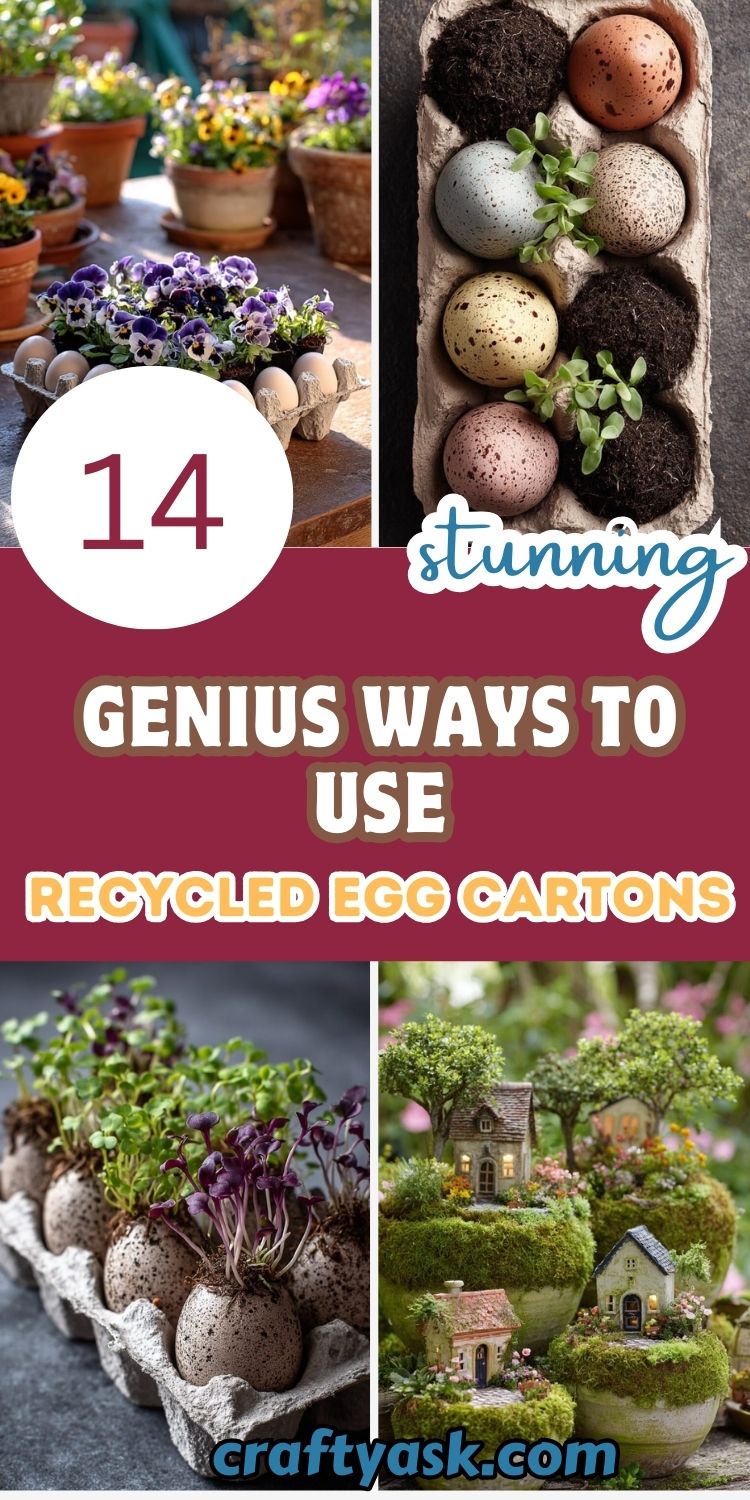

Empty egg cartons usually head straight for the trash or recycling bin, but they’re quietly one of the most useful tools you can keep for your garden.
It’s easy to overlook them, especially when you’re focused on bigger supplies like soil, pots, and planters, but skipping small, reusable materials means missing out on clever ways to save money and cut down on waste.
Try these 14 genius ways to use recycled egg cartons in your garden to save money, reduce waste, and make your gardening routine easier.
1. Start Seedlings in a Repurposed Egg Carton
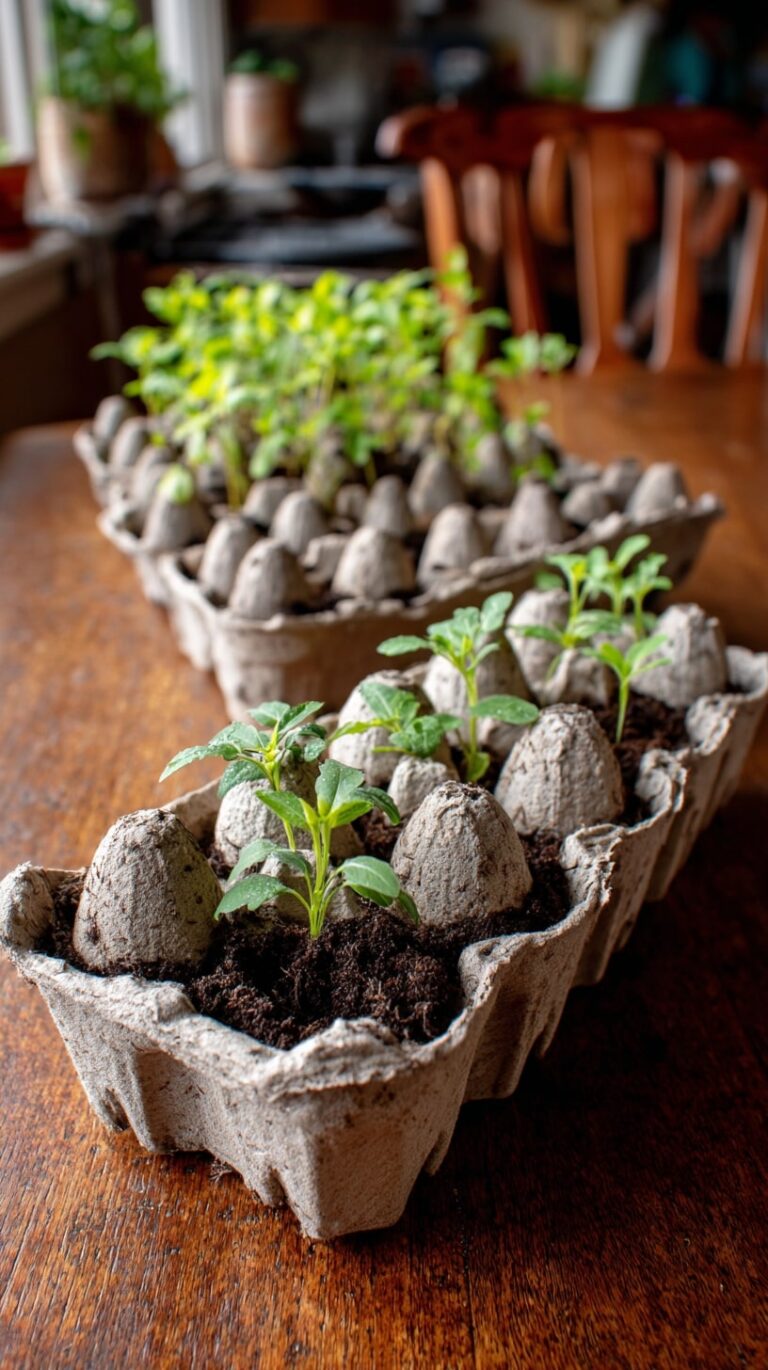
Egg cartons give seedlings an orderly start while keeping soil neatly contained. The molded pockets cradle each plant, preventing root tangling and conserving space.
Cardboard breathes, helping prevent excess moisture buildup, and the soft earthy tones let fresh greens pop.
Tuck in crushed eggshell halves for added calcium, then transplant directly without disturbing delicate roots.
2. Transform Eggshells into Colorful Mini Planters
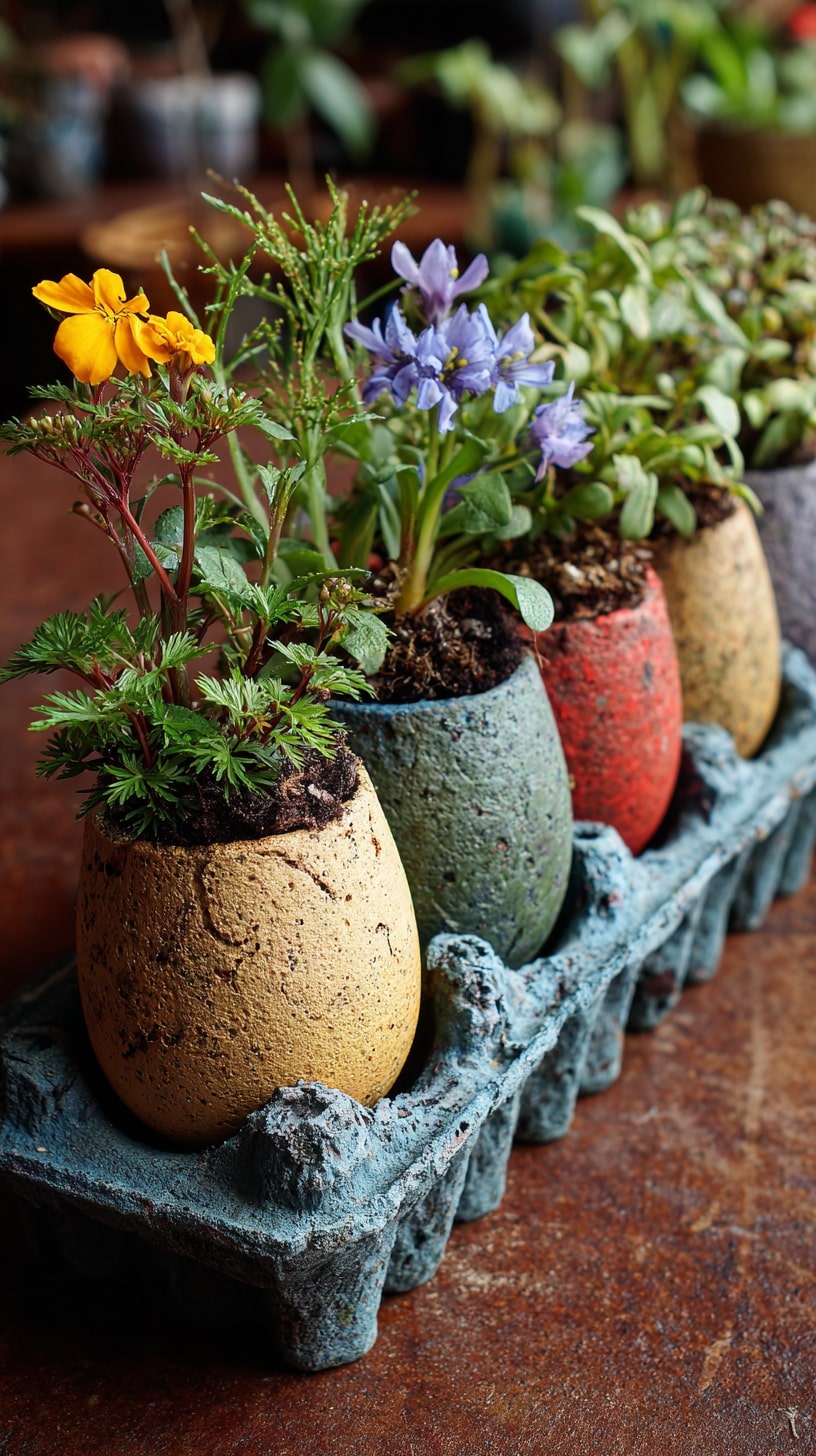
Eggshells, hand-painted in muted jewel tones, bring a playful rhythm to a simple carton base. Each shell becomes a tiny pot, holding marigolds, periwinkle blooms, or soft greenery.
The carton’s rough texture contrasts with the smooth, speckled shells, grounding the display.
Perfect for windowsills, it’s portable, low-cost, and adds a touch of crafted charm to small-scale planting.
3. Frame Mini Blooms with a Carton Border
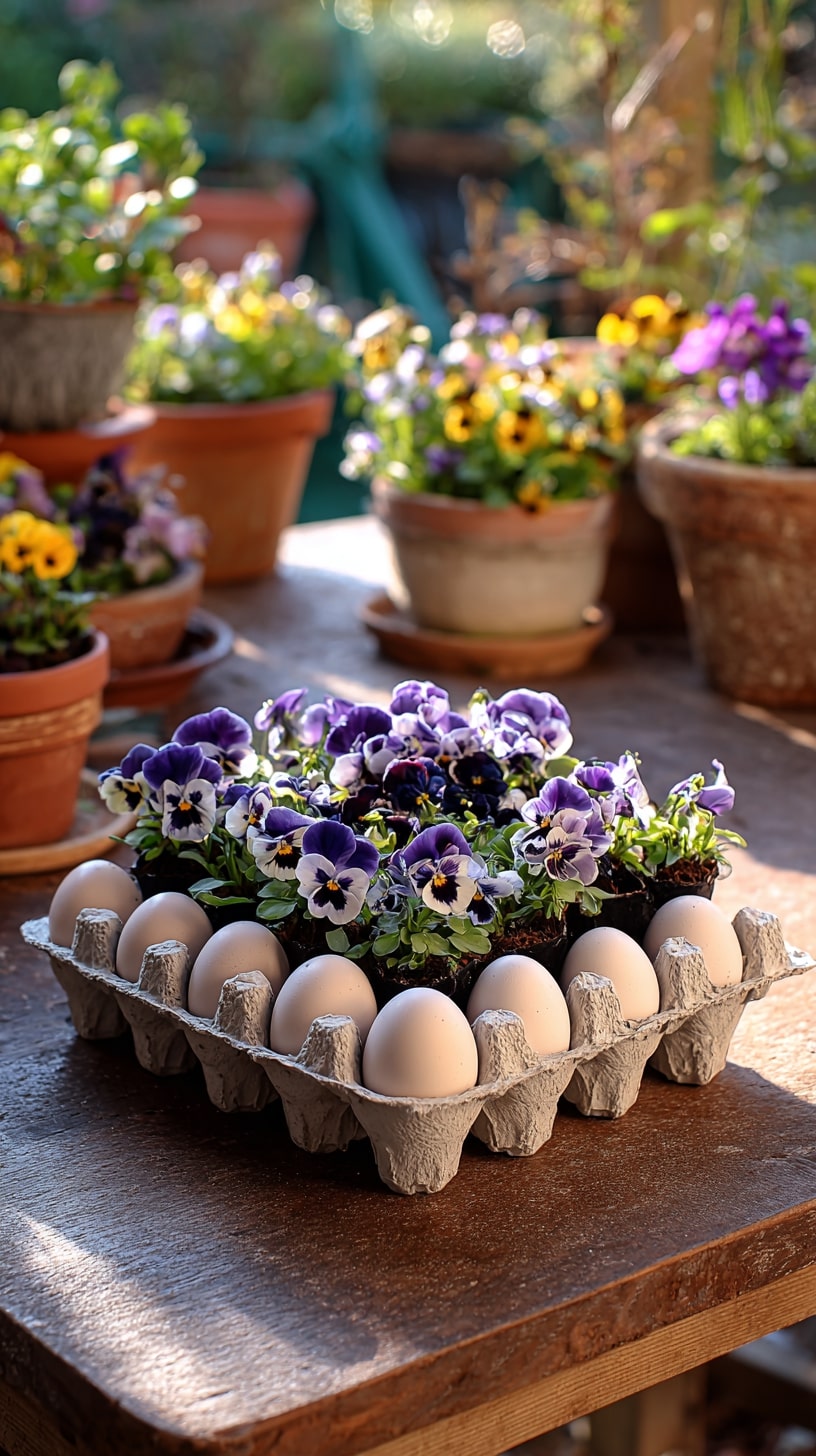
Egg cartons create a low wall that frames a bed of vibrant violas. The pale shells form a visual rhythm, breaking up the green foliage with creamy arcs.
Central planting feels lush yet contained, almost like a living table centerpiece. It’s easy to move, light to handle, and turns a throwaway container into a neat, seasonal display.
4. Arrange Succulents in a Compact Carton Grid
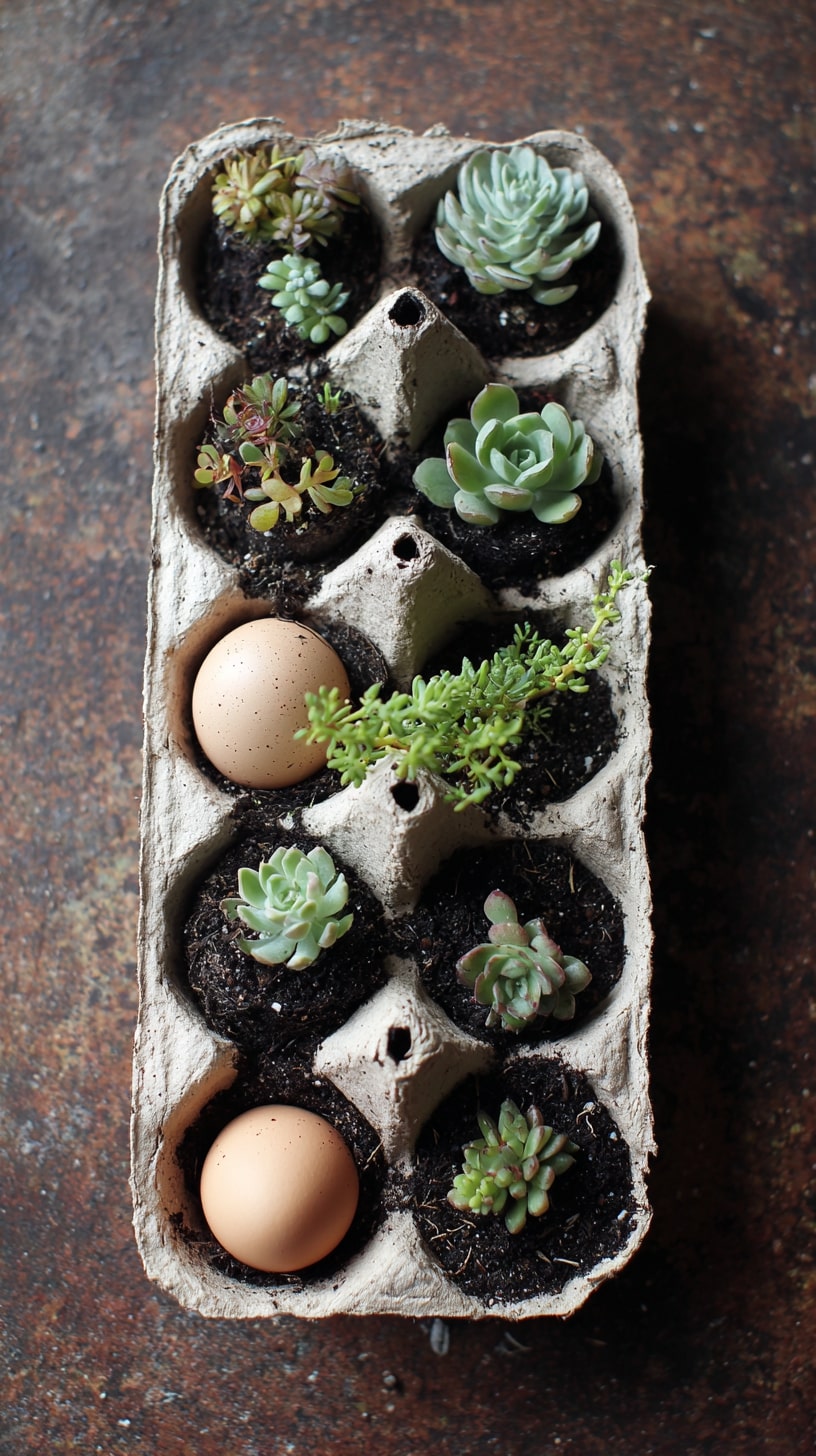
A dozen slots become a tidy stage for small succulents, each rosette sitting snug in its own pocket.
Muted greens and dusty blues contrast with warm brown eggs, adding natural balance.
The carton’s matte fiber surface pairs well with the plants’ fleshy leaves, while the tight spacing keeps the display feeling full without overpowering a small table or windowsill.
5. Start Herb Cuttings in Recycled Carton Trays
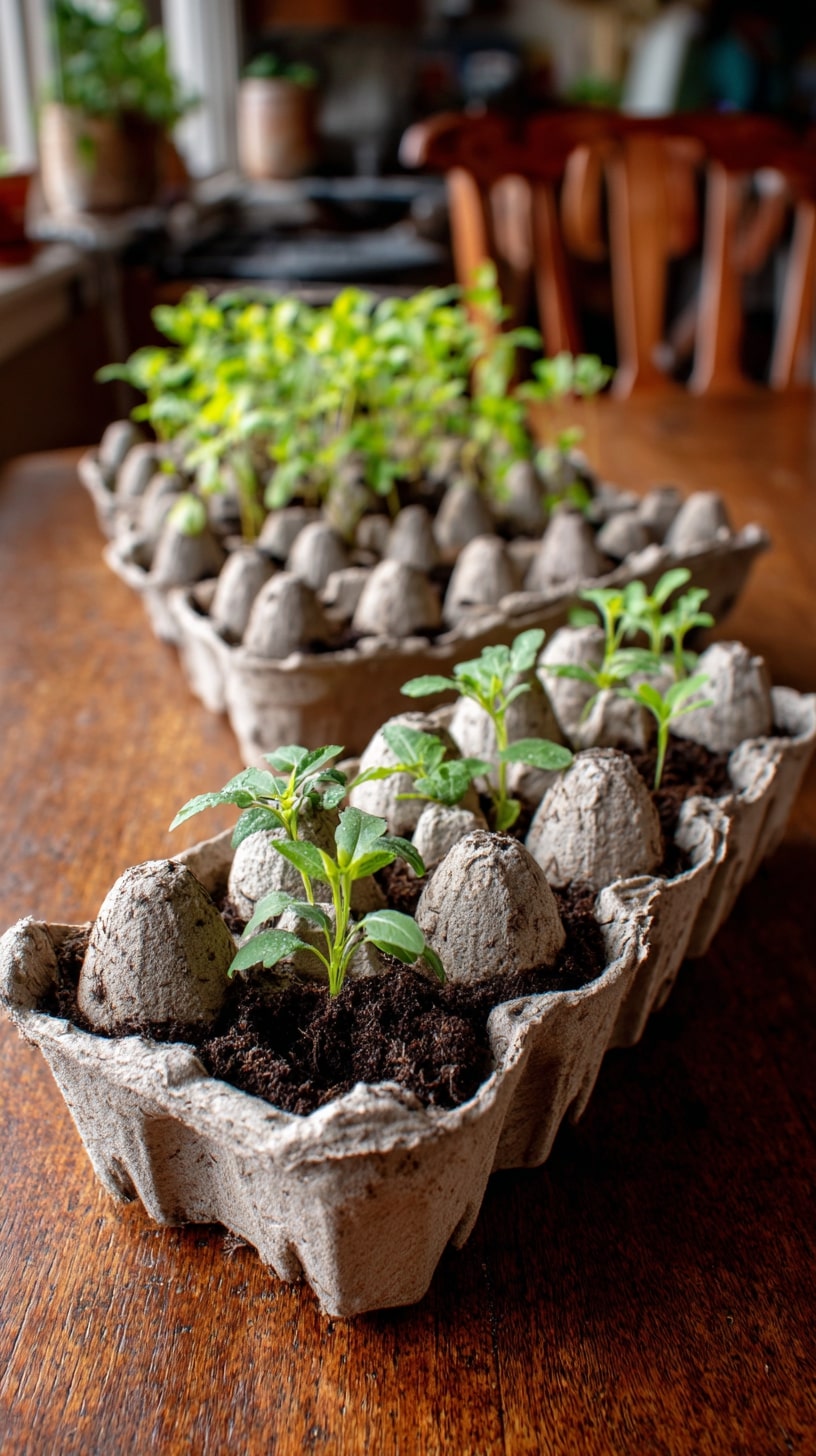
Large fiber cartons give young herbs and vegetables room to root while keeping them neatly organized.
The high ridges between pockets act as natural dividers, reducing moisture spread and helping seedlings stay upright.
The muted gray pulp blends into rustic interiors, making them practical for indoor starts before plants are ready for the outdoor garden.
6. Build a Living Wall with Upcycled Carton Pods
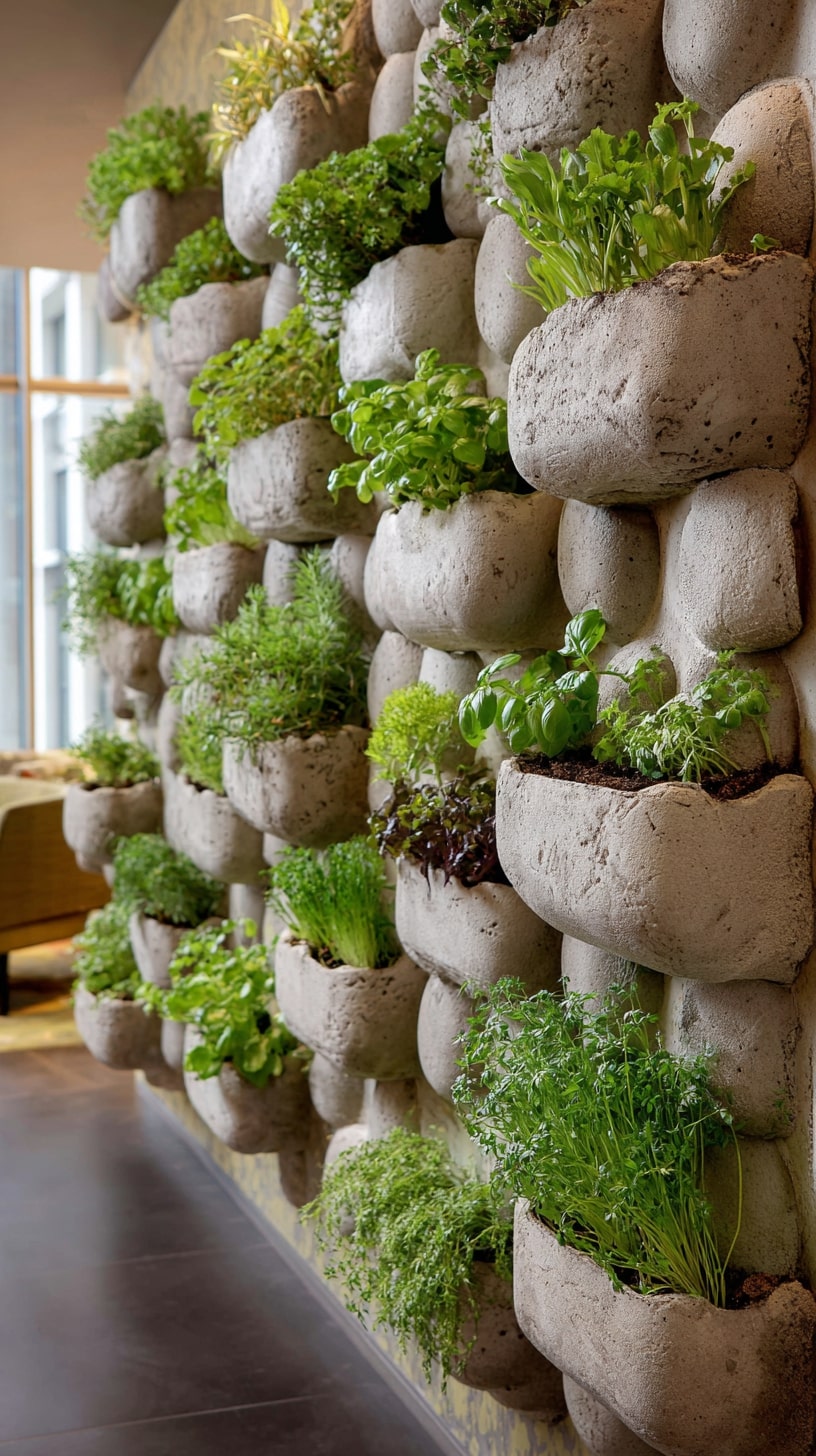
Egg carton sections, reshaped and stacked, form a textured green wall alive with herbs and microgreens.
Each pod creates its own micro-pocket of soil, perfect for dense planting. The repeating blocky pattern feels sculptural, softening only where leaves spill over.
It’s a space-saver, a focal point, and a reminder that vertical gardens can start from the simplest materials.
7. Fill Carton Trays with Dense Windowsill Seed Starts
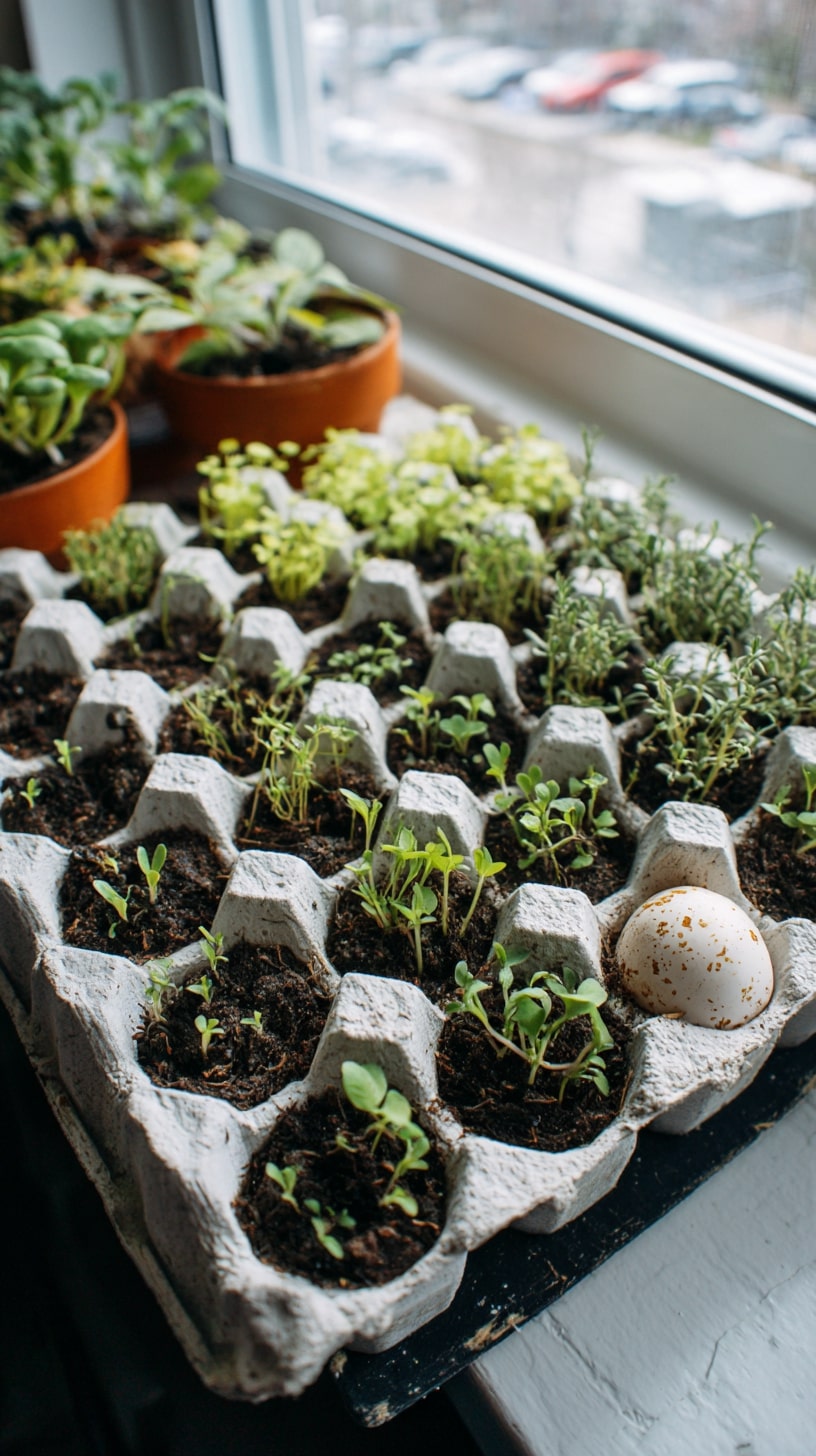
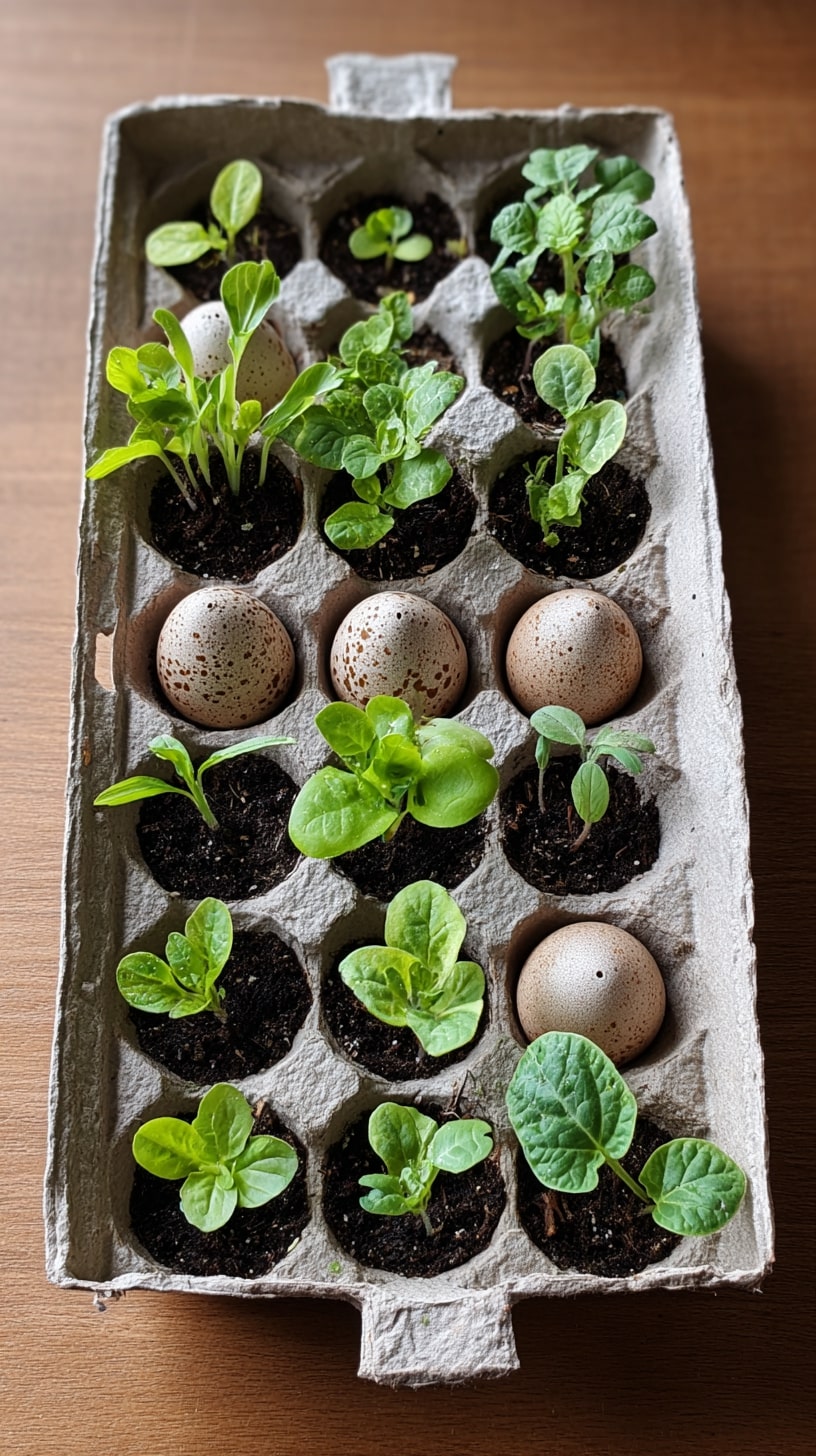
A flat pulp carton holds dozens of seedlings in clean, organized rows. The uniform cells make watering easy, with no runoff between pockets.
Soft gray fiber offsets fresh green shoots, highlighting growth at every stage.
Perfect for narrow sills, it turns unused indoor light into a productive growing strip without the need for bulky seed trays or pots.
8. Use Cartons as a Stable Herb Pot Carrier
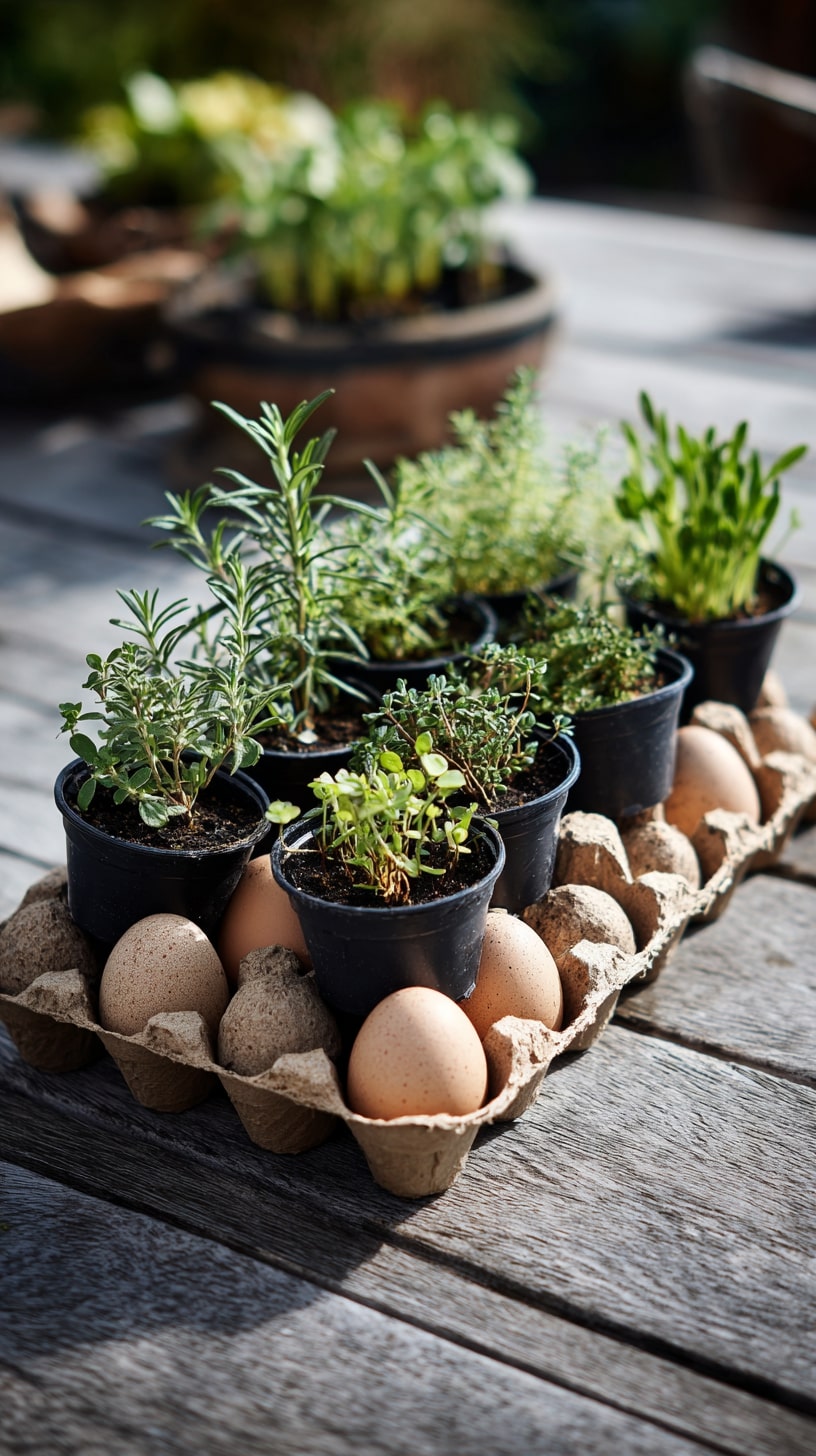
Egg cartons cradle small nursery pots, keeping them upright and spaced evenly during transport or display.
The warm brown shells tucked between black pots add an earthy accent and hint at the upcycled nature of the holder.
Ideal for moving delicate herbs like rosemary and thyme outdoors, it prevents tipping while giving a rustic, market-day presentation.
9. Repurpose Cartons to Organize Garden Stones and Faux Eggs
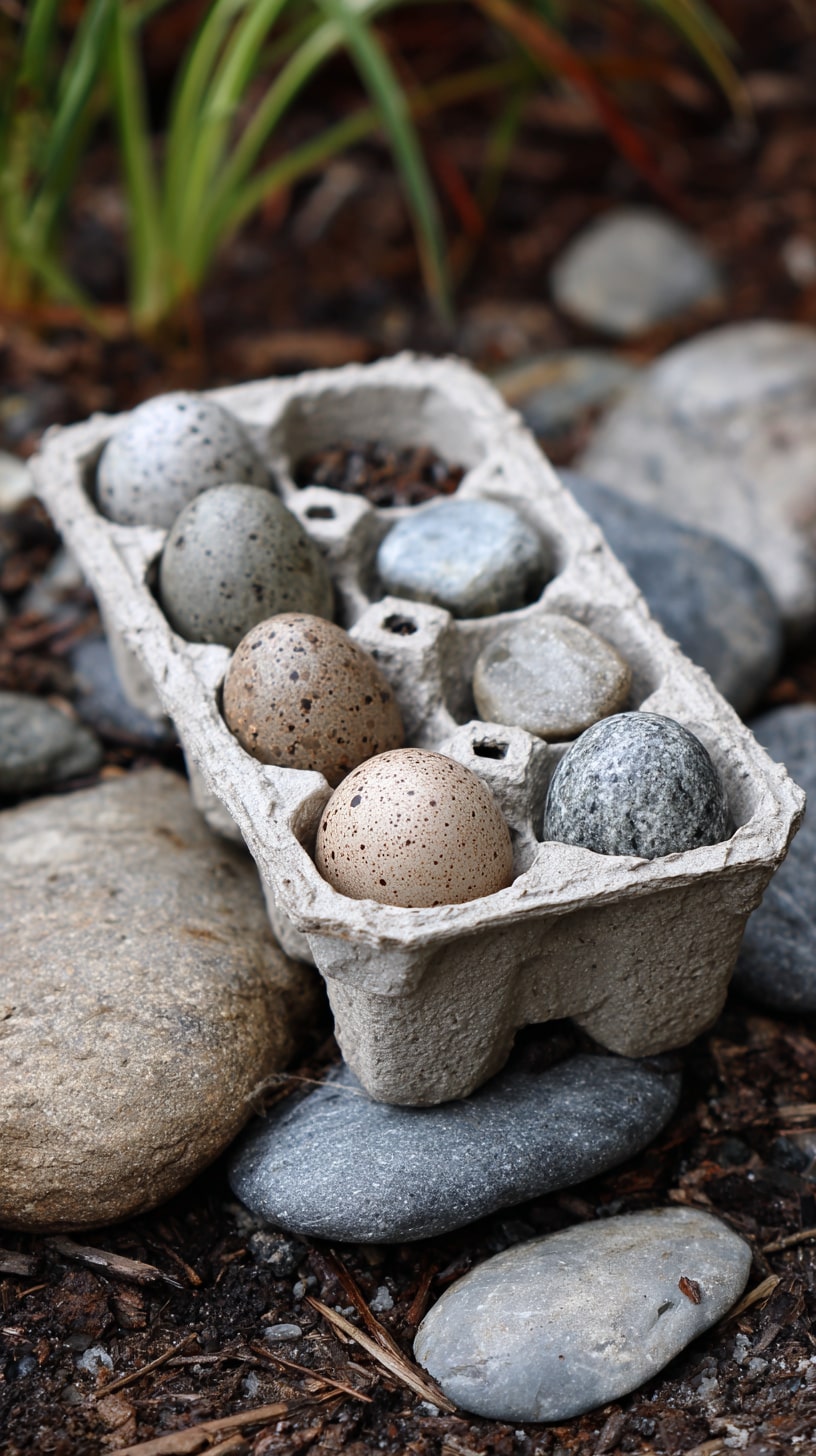
A small carton holds speckled eggs and smooth river rocks in a snug, grid-like layout.
The muted grays and browns blend naturally with the surrounding stones, giving it a camouflaged, earthy feel.
Ideal for sorting decorative garden elements or keeping seed bombs separated before planting, it turns a humble container into a tidy, portable organizer.
10. Brighten Garden Beds with Painted Herb Markers
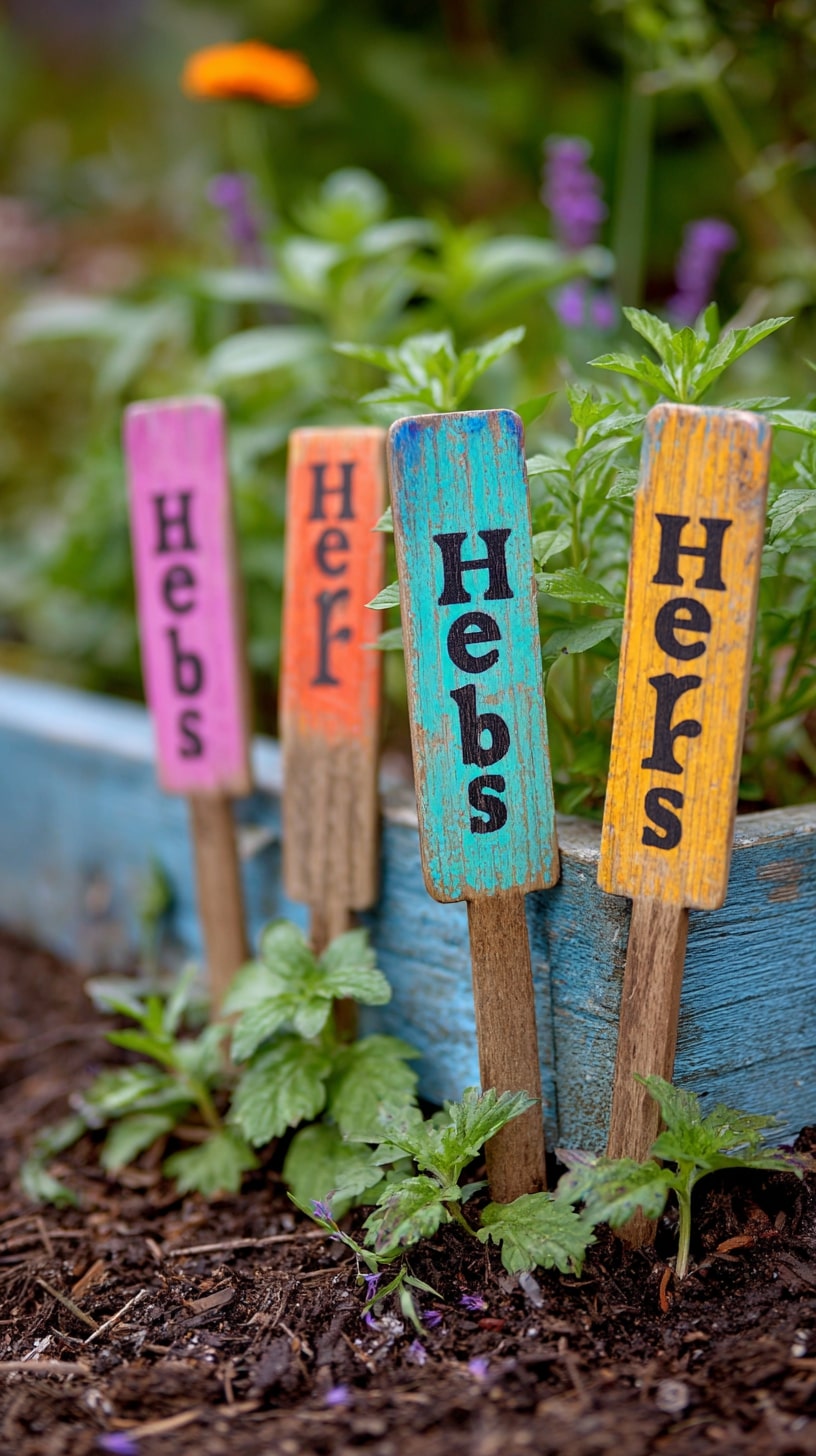
Color-washed wooden stakes in pink, orange, turquoise, and yellow pop against green foliage, making plant identification easy at a glance.
The bold black lettering adds vintage charm while staying highly legible. Weathered edges give them a handmade, well-loved feel.
Perfect for pairing with recycled carton seed starters, they bring personality and order to any herb patch.
11. Pair Painted Eggshells with Soil Pods for Seed Starting
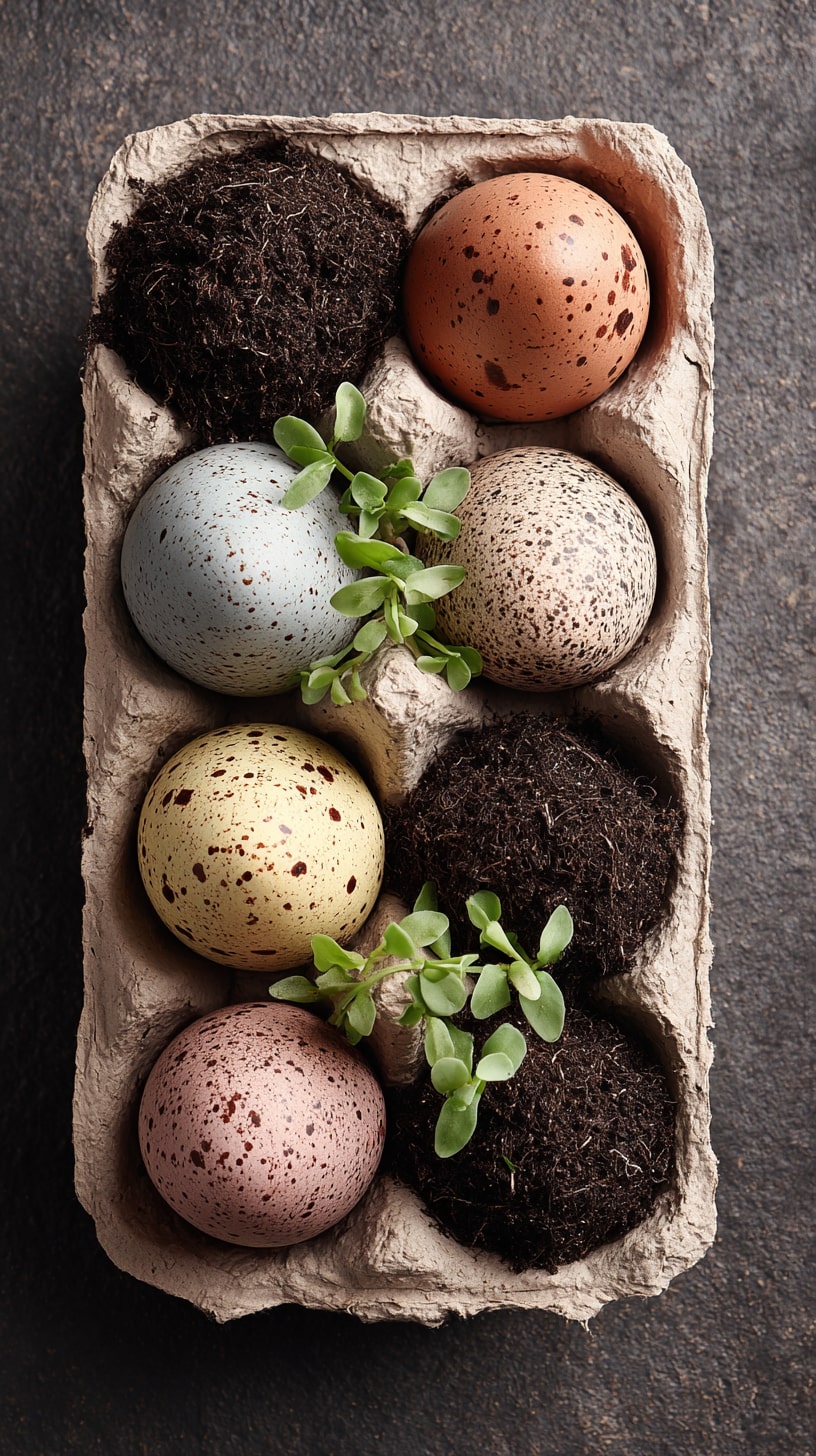
A six-slot carton blends soft speckled eggs in pastel and earth tones with rich mounds of potting soil. Young sprouts break the symmetry, adding life to the neatly arranged grid.
The contrast between smooth shells and coarse soil makes each element stand out. It’s compact, decorative, and perfectly suited for starting small plants indoors before transplanting.
12. Alternate Eggshells and Microgreens for a Balanced Display
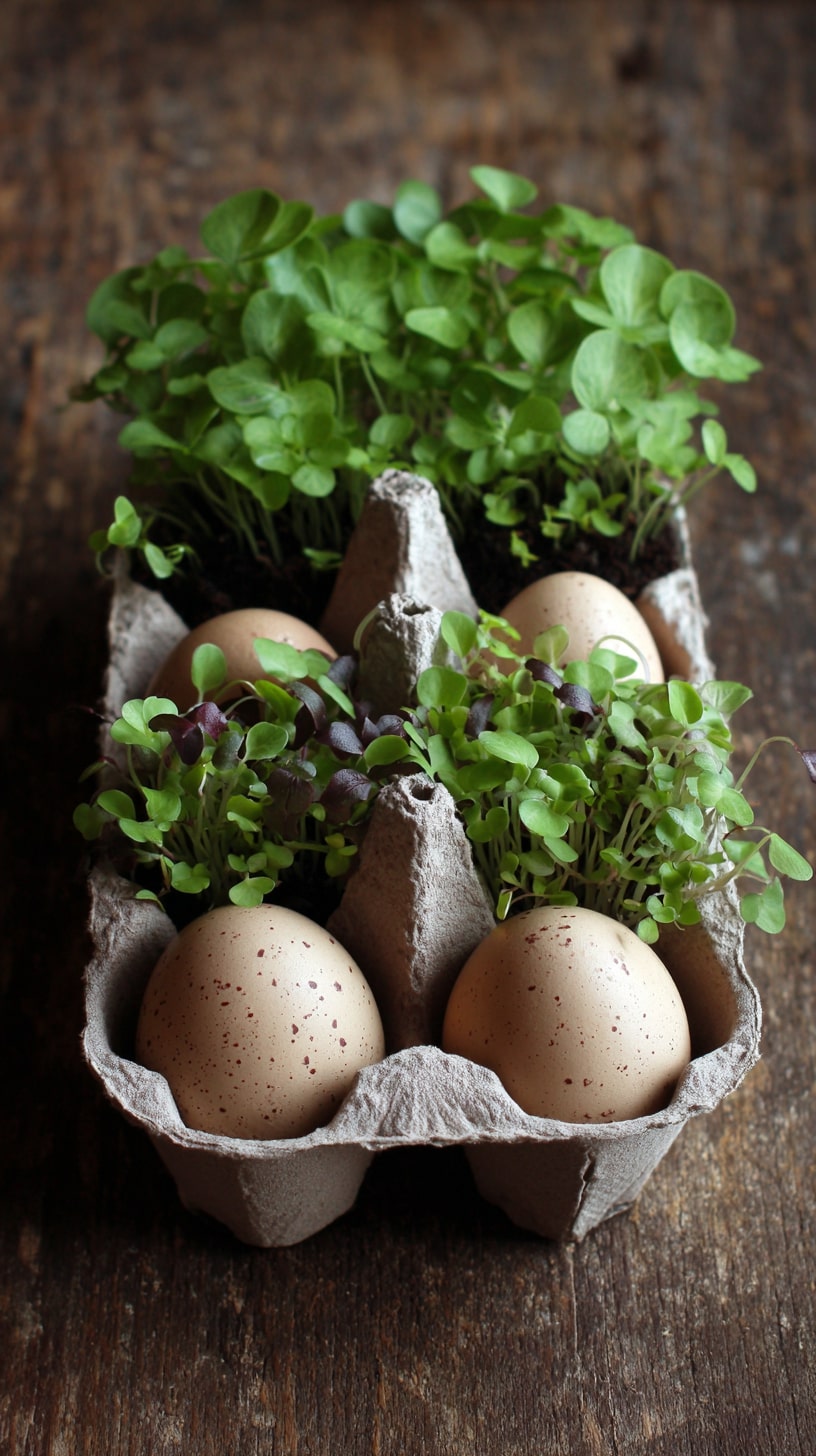
A six-slot carton alternates speckled eggs with lush clusters of young greens, creating a rhythm of smooth curves and leafy textures.
The muted beige shells ground the vivid foliage, making the greens look even fres.
13. Grow Microgreens in Speckled Eggshell Planters
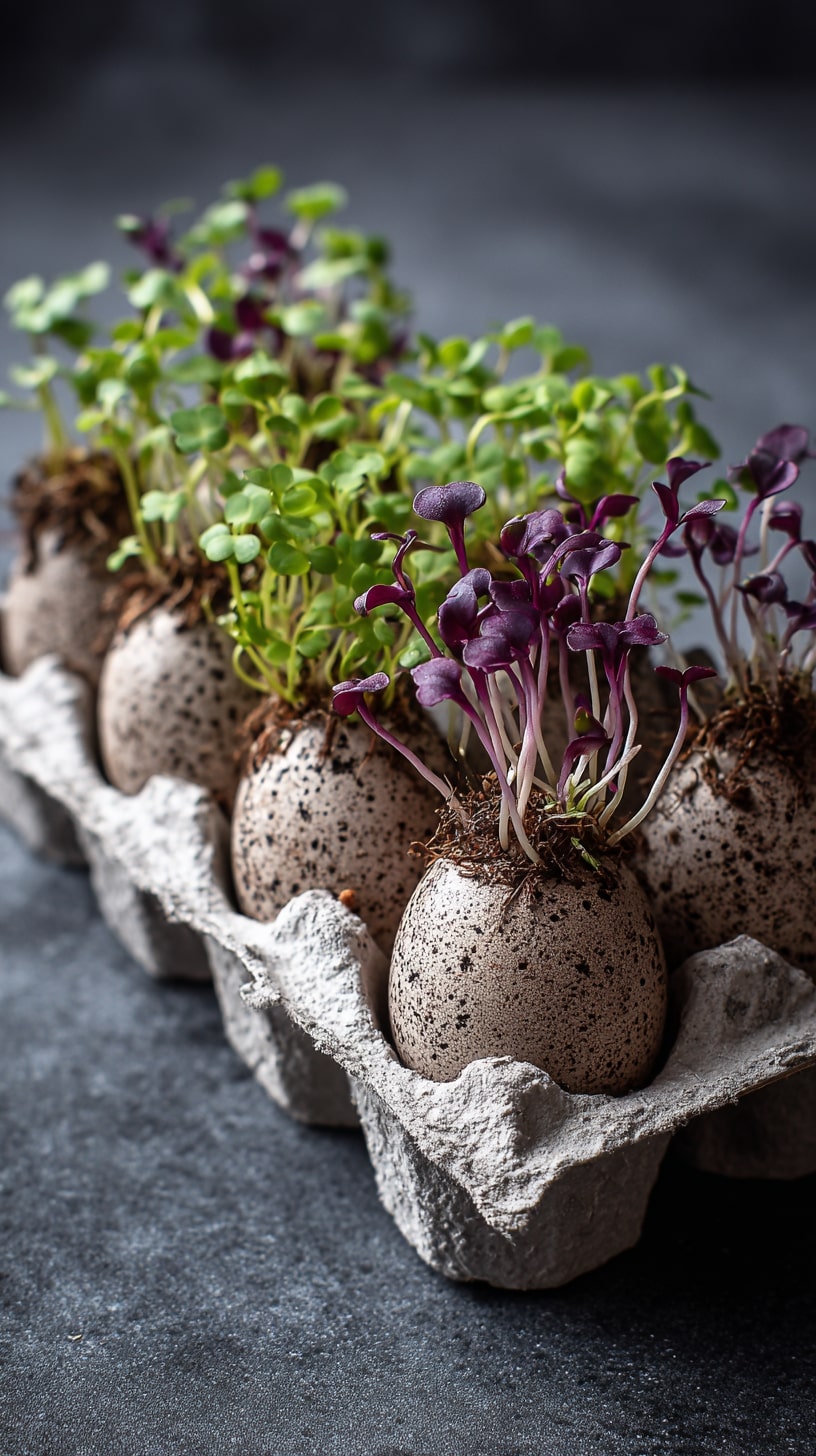
Speckled eggshell halves, filled with soil, cradle neat bunches of microgreens in shades of emerald and deep violet.
Their rounded forms sit snug in a recycled carton, giving the row a tidy, rhythmic flow.
The organic shell texture pairs beautifully with the carton’s rough pulp, making this setup as decorative as it is practical for countertop harvesting.
14. Craft Miniature Fairy Gardens with Egg Carton Planters
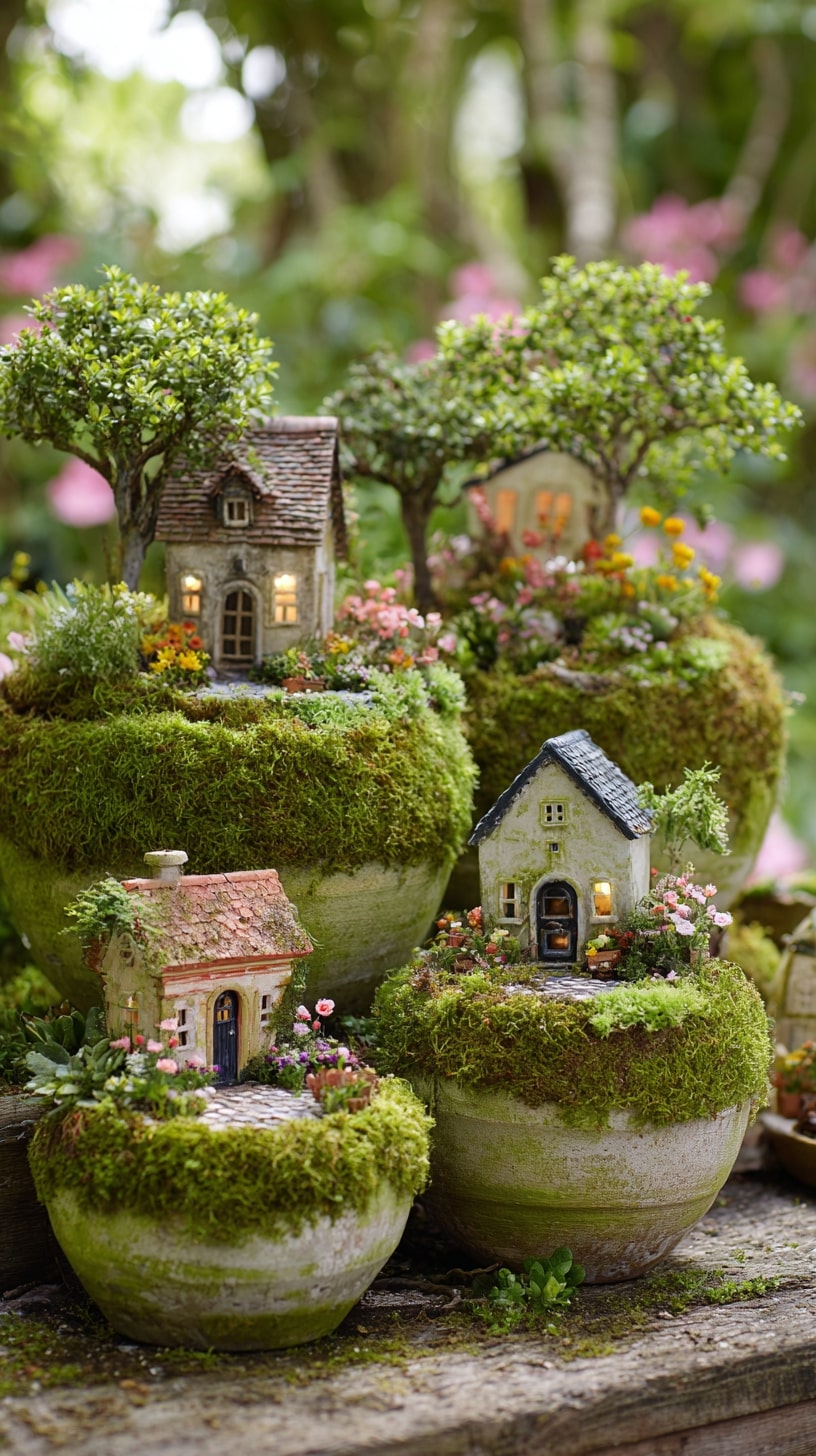
Moss-covered mounds dotted with tiny houses turn recycled egg carton pods into whimsical landscapes.
Each section becomes a self-contained scene, blending miniature trees with bursts of flowers for scale and charm.
The curved bowl shapes soften edges, while clustered placement creates a layered village effect. It’s playful, detailed, and surprisingly adaptable to indoor or outdoor tabletops.